


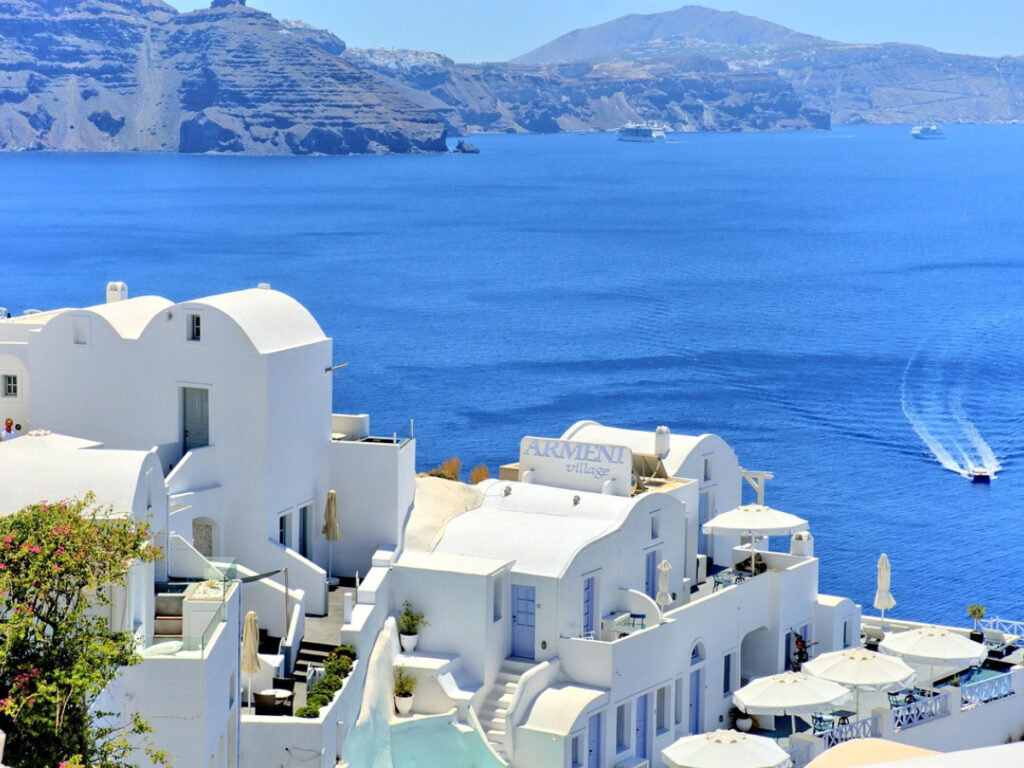
In early 2025, the Greek island of Santorini and its surroundings were rocked by thousands of earthquakes, raising alarms about potential volcanic activity. Seismologists, led by Stephen Hicks from University College London, have attributed this seismic swarm to molten rock coursing through an underground channel, a discovery that offers new insights into the region’s geophysical dynamics.
Stephen Hicks explained that the earthquakes, which peaked in February, were part of an active sequence affecting Santorini and nearby Amorgos. “There were hundreds to thousands of earthquakes, many strong enough to be felt,” Hicks noted. The tremors led to school closures and tourist evacuations, fueling concerns about a possible larger earthquake or volcanic eruption.
Understanding the Seismic Activity
The region’s history of large earthquakes and volcanic eruptions necessitated a thorough investigation into the cause of this recent activity. Hicks and his team utilized the vast data generated by the earthquakes to explore their origins. “We applied a new method to image the source, using modern artificial intelligence methods,” Hicks revealed. This approach allowed them to detect tens of thousands of earthquakes, a significant increase from the hundreds identified using traditional methods.
Seismometers, sensitive devices that detect ground vibrations, played a crucial role in this research. “Most of the earthquakes happened under the ocean, so we used seismic waves to understand the activity,” Hicks explained. By triangulating data from these devices, the team could precisely locate the earthquakes within tens of meters.
The Role of Molten Rock
The investigation revealed that the earthquakes were caused by molten rock, or magma, moving through the Earth’s crust. Hicks likened the process to “sticking a knife horizontally through a loaf of bread,” where the knife represents a dike of melt pushing through the crust. This movement creates fractures, resulting in the earthquakes detected at the surface.
Stephen Hicks: “It’s that breaking of the crust due to the melt moving that creates the earthquakes, and those are what we measure at the surface.”
The earthquakes exhibited a peculiar pattern, moving back and forth between Santorini and Amorgos. This behavior, described by Hicks as “ping-ponging,” highlighted the dynamic nature of the melt’s movement through the crust.
Implications for Santorini and Beyond
The findings have significant implications for understanding volcanic activity, not only in the Mediterranean but also in other geologically similar regions. “The distribution of earthquakes tells us about the pressure of the melt in the crust,” Hicks said. This information is crucial in assessing the potential for volcanic eruptions, as highly pressurized melt is more likely to ascend to the surface.
Santorini’s history of volcanic eruptions, including one of the largest on Earth thousands of years ago, underscores the importance of monitoring such activity. The research suggests that similar seismic patterns could occur in other volcanically active regions, such as Iceland.
Stephen Hicks: “We think this effect of back-and-forth earthquakes may occur in melt intrusions in other places on the Earth.”
Looking Ahead
As the seismic activity around Santorini subsides, the research provides a valuable framework for future monitoring and risk assessment. The use of AI and advanced seismology techniques has not only enhanced our understanding of the current events but also paved the way for more efficient earthquake detection and analysis worldwide.
With the potential for further seismic activity in the region, ongoing research and monitoring remain crucial. The lessons learned from Santorini could inform preparedness strategies and mitigate risks associated with volcanic eruptions in other parts of the world.