


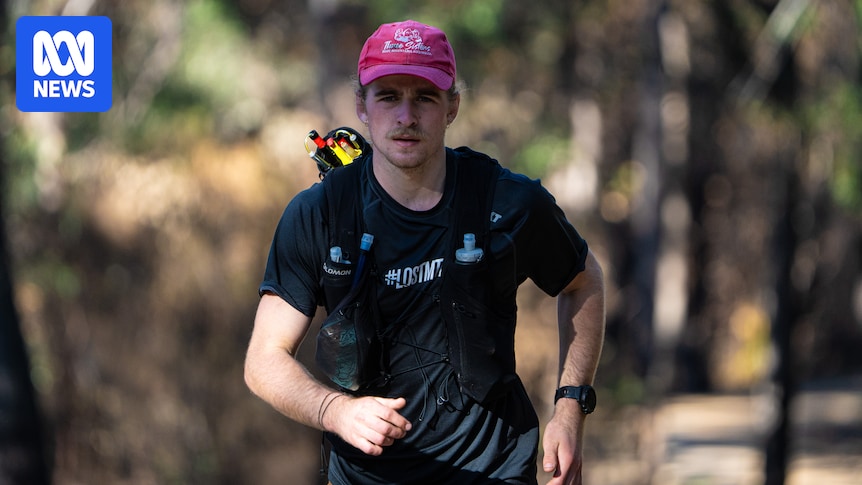
William Corlett vividly recalls the moment when his ambitious attempt to run 500 kilometers through the Blue Mountains in just seven days seemed destined for failure. Wrapped in darkness by a remote creek in the early hours of the morning, he found himself still 40 kilometers away from that leg’s designated finish line.
“I was totally done,” Corlett confessed. “The only physical way out was to keep going — we were forced to continue, and that was one of the hardest things I’ve ever done.”
More than a year after completing his journey, which also raised funds for Lifeline, the 21-year-old reflects on that moment with a sense of triumph. “Jet and I both look back at that night and go, ‘Wow, that was one of the best nights of our lives,'” he said.
The Journey to “King of the Mountains”
The Katoomba local meticulously connected hundreds of kilometers of trails in a route he dubbed the “King of the Mountains.” Camera operators tracked him day and night to create a documentary with the same title. Now, that journey has gained international recognition.
The “King of the Mountains” film premiered in Katoomba this week and has already been nominated for awards at six international film festivals. It won Best Documentary at the Next Level International Film Festival in Sydney and received nominations from several others, including Italy’s prestigious Paladino, the world’s oldest sports film festival.
Grassroots Effort and Community Support
Blue Mountains-based director and producer Romain Mongin emphasized the authenticity of the film, capturing a group of young people striving for greatness. “If William was a 40-year-old athlete with millions of dollars and sponsors behind him, maybe the story wouldn’t be as interesting because it wouldn’t be as real,” Mongin remarked.
Corlett was supported by a crew of up to 20 friends and family members, who cooked for him, set up his tent each night, and tended to his running wounds. The wider Blue Mountains business community also contributed with donations of money and gear. A Wentworth Falls butcher provided meat for the week, while a Katoomba green grocer supplied fruit and vegetables.
“The fact I had mates who could stay out with me all week and who were able to take time off work and set up camp — exactly where I plan to finish each run each day — made it fantastic,” Corlett said. “There were no hotels, there was none of that, food was brought to me wherever I was.”
The Allure of the Blue Mountains
Mongin noted that another reason for the international interest in the documentary was its celebration of the Blue Mountains landscape. “To show them the landscape that’s totally alien almost, I think that probably really drew people to it,” he explained.
The “strangeness” of the bush as a place to find stillness and peace was a key element of the film. “[William] really wanted to get a message out there for young people to get out there in the bush and experience it and use it as a catharsis for mental health,” Mongin said. “Throughout his young life, he experienced a lot of it and has constructed ways to manage it.”
“That’s how he lives his life, he’s constantly running in the bush. I’m calling him every day and he’s somewhere where there’s no reception and I felt like, for him, it was such an important part of the story.”
Corlett believes the film demonstrates the ability to overcome “impossible” challenges, a message that resonates deeply in today’s fast-paced world.
Looking Ahead
The documentary’s success has not only brought attention to Corlett’s incredible feat but also to the potential of the Blue Mountains as a backdrop for storytelling. As the film continues to make waves on the international circuit, it underscores the power of community, perseverance, and the human spirit.
As Corlett and his team look to the future, they hope the film will inspire others to embrace the outdoors and tackle their own challenges, no matter how daunting they may seem.