




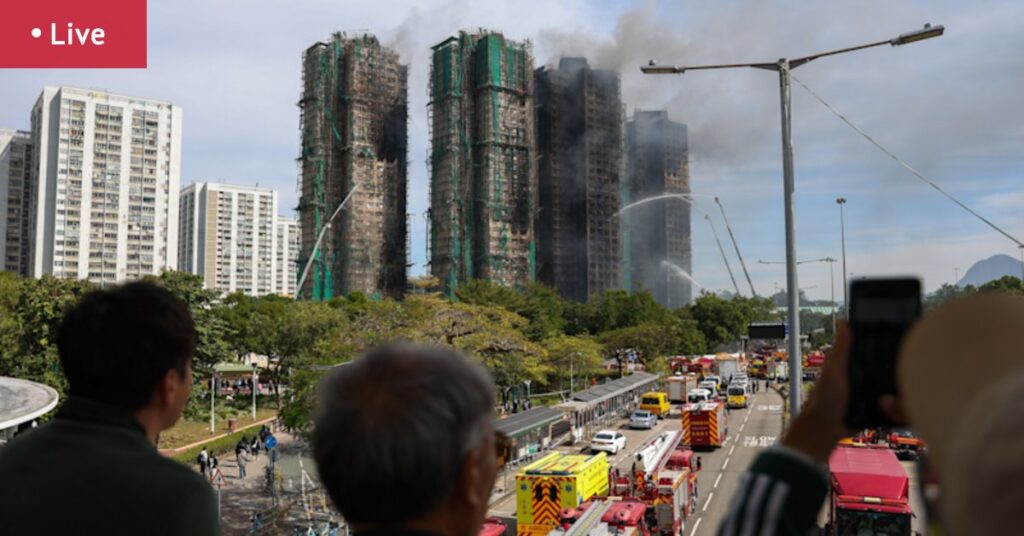
In a significant legislative shift, Australia has passed its first major environmental reforms in over two decades, marking a pivotal moment for national conservation efforts. Meanwhile, the death toll from a catastrophic fire in Hong Kong’s Tai Po district has climbed to at least 94, as rescue operations continue in the charred remains of the Wang Fuk Court housing complex.
Australia’s Environmental Reforms: A New Era
Prime Minister Anthony Albanese announced the passage of landmark environmental laws, the first since the Environment Protection and Biodiversity Conservation Act of 2000. These reforms, supported by the Greens, introduce a national environmental watchdog, impose federal regulations on native forest logging, and establish new standards to protect biodiversity.
Albanese described the reforms as a “win-win for business and the environment,” promising expedited approvals for critical projects. “These reforms are a win for business, a win for our natural environment, and a win for the community,” he declared in the House of Representatives.
“We know that the current laws are broken. And today we fix them,” said Albanese.
Political Dynamics and Opposition
The passage of these reforms was not without controversy. The opposition, led by Sussan Ley, criticized the government’s alliance with the Greens, accusing them of prioritizing political deals over substantive policy. Ley’s comments during the parliamentary debate highlighted the tensions within the chamber.
“The Greens alliance is well and truly back in business,” Ley remarked, underscoring the opposition’s discontent.
Despite the opposition’s resistance, the reforms were seen as a necessary step by environmental advocates. Monash University professor Graeme Samuel, who led the review of the country’s environment laws, praised the government’s agility in implementing the changes.
Hong Kong Fire: A Tragedy Unfolds
In Hong Kong, the aftermath of one of the deadliest fires in recent history continues to unfold. The blaze, which erupted in the densely populated Wang Fuk Court, has left at least 94 dead and over 70 injured, including 11 firefighters. Rescue teams are tirelessly working to locate any remaining survivors amidst the debris.
Derek Armstrong Chan, deputy director of Fire Services Operations, reported that the firefighting efforts are nearing completion, but challenges remain. “Debris and scaffolding were falling from upper floors,” Chan explained, highlighting the difficulties faced by emergency responders.
“Our firefighting operation is almost complete,” Chan stated. “But we are working hard to prevent the debris and embers from flaring up.”
Community Impact and Government Response
The Hong Kong government has been criticized for its handling of the disaster, with questions about the number of missing persons still unanswered. Hong Kong leader John Lee acknowledged the loss of contact with 279 individuals, adding to the community’s anxiety.
Efforts to provide temporary shelter for the displaced are ongoing, with approximately 900 people evacuated overnight. The tragedy has prompted a reevaluation of fire safety measures in high-rise buildings across the region.
Broader Implications and Future Outlook
The environmental reforms in Australia and the tragic events in Hong Kong underscore the complex interplay between policy, safety, and community well-being. Australia’s legislative changes are expected to pave the way for more sustainable development practices, while Hong Kong’s fire disaster highlights the urgent need for improved safety protocols.
As Australia moves forward with its new environmental framework, the focus will be on balancing economic growth with ecological preservation. The creation of a national environmental watchdog is anticipated to enhance accountability and enforcement of conservation laws.
In Hong Kong, the recovery efforts continue, with authorities committed to ensuring the safety and security of their citizens. The tragedy serves as a stark reminder of the vulnerabilities faced by urban populations and the critical importance of robust emergency response systems.
Both nations face significant challenges ahead, but the actions taken today will shape their futures in profound ways. As the world watches, the outcomes of these developments will offer valuable lessons in governance, resilience, and the human spirit’s capacity to overcome adversity.