




On Tuesday, Russian President Vladimir Putin welcomed Donald Trump’s special envoy, Steve Witkoff, to Moscow for discussions aimed at ending the ongoing conflict in Ukraine. This meeting took place nearly four years after Russia initiated its full-scale invasion. The summit is part of an intense period of diplomatic activity, following the United States’ presentation of a 28-point peace plan to Kyiv two weeks ago, which many perceived as skewed in favor of Moscow.
The revised peace proposal, which has been the subject of meetings between US and Ukrainian officials in Geneva and Florida, was intended to serve as the foundation for the Moscow summit discussions. Ukraine’s President Volodymyr Zelenskyy expressed cautious optimism about the updated proposal, stating it “looks better” but emphasizing that “it was not over yet.” The White House echoed this sentiment, expressing “very optimistic” expectations for reaching a deal.
However, by Tuesday evening, any hopes for progress seemed dim. Witkoff departed Moscow with no clear signs of advancement, and the Kremlin stated that the two sides were “neither further nor closer to resolving the crisis in Ukraine.” European leaders, who had hoped for a pivotal week in US-brokered peace talks, expressed concerns that the summit might pressure Ukraine into making concessions.
The Diplomatic Standoff
Analysts widely believe that any significant alterations to the original 28-point plan would be unacceptable to the Kremlin. Just before the talks commenced, Putin made hawkish statements accusing European governments of sabotaging the peace process. “Russia does not intend to fight Europe, but if Europe starts, we are ready right now,” he declared, further complicating the diplomatic landscape.
To gain more insight into the rehashed plan and the potential for real progress, Pjotr Sauer, a Russian affairs reporter, provided his analysis. “Everything points to the fact that Russia is not going to accept any revisions,” he noted, highlighting the challenges facing the peace process.
Putin’s Strategic Calculations
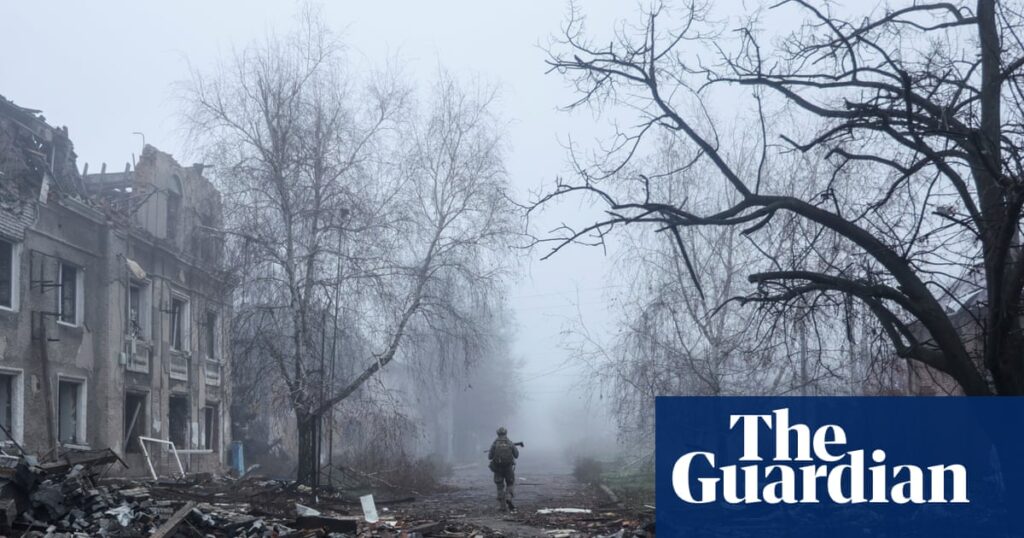
On the eve of the summit, Russian television broadcasted images of Putin in military attire, delivering a speech from a command post claiming Russian forces had taken control of the strategic city of Pokrovsk in Ukraine. Ukraine quickly refuted this, asserting that its forces still controlled the northern part of the city.
Kremlin spokesperson Dmitry Peskov indicated that while discussions would address the “understandings” reached between Washington and Kyiv, Russia remained firm on achieving the goals of its “special operation.” These goals include significant reductions to Ukraine’s military, a ban on Western military aid, limits on political autonomy, and the cession of Ukrainian territories in the east.
“The Russians see this as a win-win situation,” said Pjotr Sauer. “Either the plan they want goes ahead, or they just keep on fighting.”
The Role of Steve Witkoff
Steve Witkoff, a former property developer with no formal diplomatic experience, has been criticized for his perceived closeness to the Russian position. A leaked phone call between Witkoff and Kremlin aide Yuri Ushakov suggested that Witkoff was coaching Russian officials on how to gain favor with Trump, raising questions about his effectiveness as a negotiator.
“Witkoff is not ideological, he’s a purely transactional person,” Pjotr Sauer explained. “The Russians themselves realize Witkoff isn’t an experienced diplomat.”
Trump’s Calculations
Former President Trump’s stance on the peace process has been inconsistent. Initially recognizing Putin as the primary obstacle to peace, Trump’s perspective shifted after the introduction of the 28-point plan, leading him to criticize Ukraine as “ungrateful.”
“There is a danger that Russia says: ‘Listen, we are on paper, ready for peace. If only Ukraine does this, this and this,’” Pjotr Sauer noted. “Then Witkoff might go back to Trump saying, well, if peace is to be reached, Ukraine has to give up land and compromise on a few other points.”
Looking Ahead
The path to peace remains fraught with challenges. While Ukraine has shown a willingness to compromise, Russia appears to be betting on a stronger position in the coming months. The US, under Trump’s leadership, faces the difficult task of crafting a peace plan that satisfies all parties involved.
“Ukraine is ready to compromise. But Russia thinks ‘Why compromise now? In two, three months, our position will be stronger,’” said Pjotr Sauer. With Trump’s approval ratings at a historic low, the pressure to deliver a diplomatic victory is mounting.
As the situation unfolds, the world watches closely, hoping for a resolution that brings lasting peace to a region long mired in conflict.