
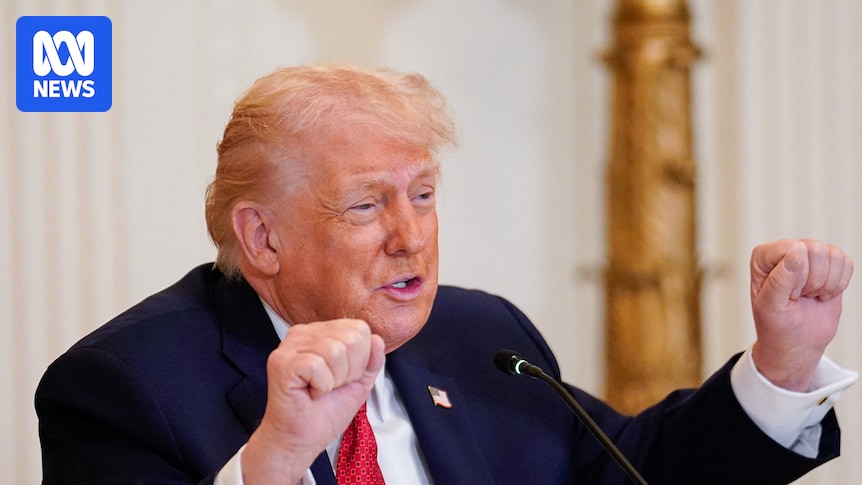

Americans actively supporting Ukraine’s war effort have expressed deep embarrassment and dismay over former President Donald Trump’s recent pressures on Kyiv. They argue that his administration’s latest peace proposal is tantamount to betrayal and another significant failure in U.S. foreign policy.
“Complete bullshit and a betrayal by Trump,” remarked an American special forces veteran involved in training and advising the Ukrainian military since Russia’s full-scale invasion in February 2022. “But are you even surprised?”
The controversy erupted last week when a 28-point peace plan, reportedly drafted by Steve Witkoff, a Trump envoy, was leaked. The plan, allegedly negotiated with Kremlin adviser Kirill Dmitriev, appeared to repurpose Vladimir Putin’s maximalist demands on Ukraine.
International Volunteers and GOP Reactions
Since the onset of the conflict nearly four years ago, thousands of foreigners, including soldiers, veterans, trainers, and medics, have flocked to Ukraine. Among them are hundreds, if not thousands, of Americans, many of whom identify as Republicans. These individuals now find themselves grappling with Trump’s antagonism toward the nation they assist.
Within the GOP, there is also discontent with Trump’s latest demands on Ukraine. Nebraska Congressman Don Bacon criticized the plan as “gross buffoonery” and akin to “pushing a surrender plan on Ukraine” that “looks like Russia wrote it.”
“Follows Russia’s talking points almost to the letter,” noted the same American veteran, who labeled Witkoff a “Russian sycophant.”
Confusion and Diplomatic Strains
The peace plan’s authorship remains a point of contention. Republican Senator Mike Rounds claimed at the Halifax International Security Forum that Secretary of State Marco Rubio labeled it a preliminary Kremlin offer, a claim Rubio quickly denied.
Another American in Ukraine’s defense sector described the peace plan as another turbulent chapter in the Trump-Zelenskyy relationship. He expressed sympathy for U.S. diplomats in Kyiv, whom he described as “motivated but totally handcuffed.”
Steve Andre, a Michigan native and former Ukrainian military press officer now re-enlisting in Kyiv, views the situation as indicative of the U.S.’s waning global influence. “The administration doesn’t want to take the time and figure out what is actually happening here,” he said. “I’m disappointed in the American people. If they had even an eighth of the bravery and willpower of the Ukrainians, America might still be a great place.”
Major Concessions and Concerns
The proposed peace plan demands significant concessions from Ukraine, including the cession of Donetsk and Luhansk, a constitutional commitment never to join NATO, and substantial reductions in military size and arsenal.
A NATO veteran training Ukrainian soldiers alongside former U.S. servicemen criticized the plan as “pathetic,” suggesting financial motivations for the U.S. government. “I think they believe that they can get the kind of payout that Cheney and Rumsfeld did, by doing business with Russia while trying to control all of the ‘recovery’ efforts here,” he said, referencing past rapprochement efforts with Russia.
“Trump’s [administration] is full of idiot boomers who’ve never dealt with actual stakes in their entire lives,” he added. “I’d say they’ve cooked up some idiotic peace fantasy, but I’m certain they are aware of what surrender means for us.”
Implications and Future Prospects
The proposed peace plan has sparked significant backlash among those on the ground in Ukraine, reflecting broader concerns about U.S. foreign policy direction. The discontent among American volunteers and veterans underscores the complex dynamics at play in the ongoing conflict.
As the situation evolves, the international community will be closely watching how these diplomatic tensions unfold and what implications they may have for Ukraine’s sovereignty and the broader geopolitical landscape.
For now, the peace plan remains a contentious issue, with significant opposition both within and outside the United States. The coming months will likely determine whether these proposals gain traction or are ultimately dismissed as unfeasible.