


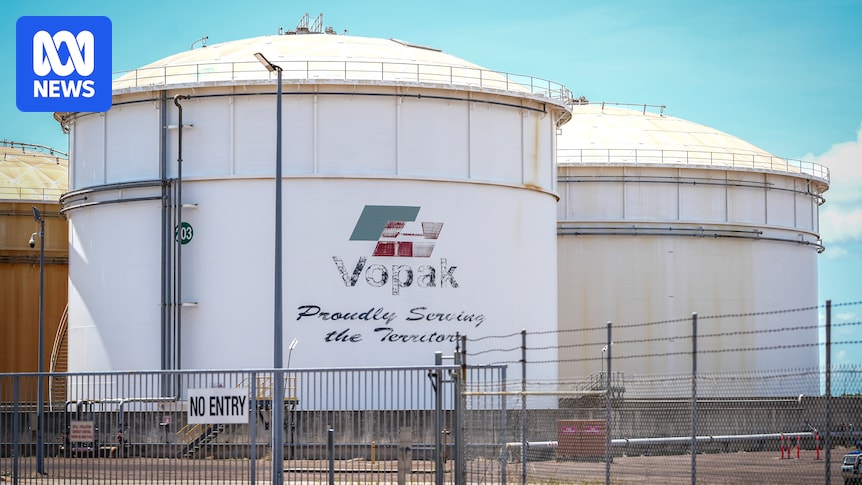
An ambitious plan for the Northern Territory to become a global leader in carbon capture and storage has ignited fears that Darwin could transform into a “dumping ground for the world’s climate pollution.” This month, the Northern Territory government announced its collaboration with Dutch global tank storage company Vopak to import foreign liquid carbon dioxide (CO2).
Vopak aims to construct a CO2 import terminal at the Middle Arm Industrial Hub on Darwin Harbour by the early 2030s. This facility will receive CO2 shipments, primarily from Japan, storing up to 5 million tonnes before pumping it into deep underground reservoirs beneath the seabed off the coast of Darwin for permanent storage.
Every year, billions of tonnes of CO2 are emitted into the atmosphere, mainly from burning fossil fuels like coal, oil, and gas, contributing significantly to global warming. The Intergovernmental Panel on Climate Change has consistently warned that global emissions must fall to net zero by 2050 to mitigate the most severe impacts of climate change.
Geological Carbon Storage: A Solution or a Risk?
Matthias Raab, a geoscientist and the chief executive of CO2CRC, one of Australia’s leading carbon capture and storage (CCS) research and development companies, advocates for “geological carbon storage” as a key solution. “Reducing carbon dioxide emissions globally is one of the greatest priorities of our generation,” he stated.
Dr. Raab highlighted that the Northern Territory has two offshore locations capable of storing “decades, if not centuries” worth of CO2 — the Bonaparte Basin and the depleted Bayu-Undan gas field. “In terms of the economic opportunity, the scale is enormous,” he added.
Environmental and Safety Concerns
Despite the potential benefits, CCS technology remains largely unproven at scale. Kirsty Howey, director of the Environment Centre NT, expressed concerns that importing CO2 could turn Darwin into “a dumping ground for the world’s climate pollution.” She warned of the risks associated with potential leaks.
“If there’s a rupture or a leak, it’s not like methane, which disappears into the air. The CO2 could actually move over the suburbs of Palmerston or Darwin and suffocate human populations,” Howey cautioned.
The NT government and Vopak have declined to comment on these concerns.
Global and Local Developments in CCS
The announcement comes amidst a global push for CCS, with over $4 billion in public funds invested in the technology since 2003. However, a report by the Climate Council indicates that CCS has “consistently failed to deliver promised results.”
This month, Inpex lodged plans with the federal Environment Department for a CCS project in the Bonaparte Gulf, about 250 kilometers southwest of Darwin. This joint venture with Santos would mark Australia’s first offshore CCS project and its largest to date.
Dr. Raab emphasized the importance of pioneering projects like Inpex’s as other nations ramp up their investments in CCS. He expressed confidence in the safe storage of vast amounts of CO2 “for millions of years,” citing studies that suggest a $600 billion opportunity for Australia to become a carbon storage hub over the next three decades.
Challenges and Future Prospects
While two CCS projects are operational in Australia, neither has achieved complete success. The Gorgon project in Western Australia has stored significant CO2 volumes but struggled to meet its original targets. Meanwhile, the Moomba project in South Australia is performing well but remains unproven at scale.
Dr. Raab noted that federal and Northern Territory laws required to facilitate CO2 imports are still under development. “The federal government has consulted widely, considered industry input, and is finalizing bilateral agreements with neighboring countries,” he explained.
As the world grapples with climate change, the Northern Territory’s plan represents a bold step in carbon management. However, the path forward will require careful consideration of environmental implications and technological feasibility.