

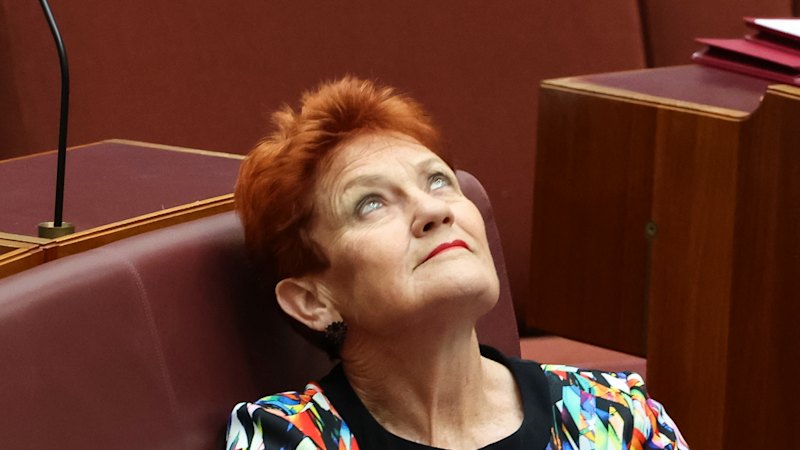
Senator Pauline Hanson, leader of the One Nation party, has long been known for her controversial stunts, which often serve as a platform for her populist political career. Recently, she made headlines by wearing a burqa into the Australian Senate chamber, a move that many saw as a provocative act aimed at drawing attention. Despite the outrage and amusement her actions incite, Hanson’s influence appears to be growing, with her party’s support rising significantly in recent polls.
One Nation received 6.4 percent of first preference votes in the last federal election. However, a poll conducted by The Australian Financial Review/Redbridge/Accent Research showed the party’s support had surged to a record 18 percent just seven months later. Additionally, the Resolve Political Monitor published in September by the Herald recorded One Nation’s support at 12 percent, marking its first entry into double digits.
Populism and Political Stunts
Hanson is not alone in her approach. Other populist politicians, such as Bob Katter, Mark Latham, and Barnaby Joyce—who recently resigned from the National Party and is rumored to be joining One Nation—also position themselves as champions of the ordinary people against the elite. However, their actual achievements for their constituents remain questionable.
These politicians often engage in acts that garner media attention, ranging from participating in anti-immigration rallies to making inflammatory statements against LGBT advocates. Such actions ensure their visibility on news platforms and social media, appealing to voters who prioritize celebrity over policy.
The Role of Preferential Voting
One Nation’s success is partially attributed to Australia’s preferential voting system. This system allows minor parties to thrive despite limited direct support. Apart from Bob Katter, who maintains a stronghold in Far North Queensland, most populist politicians, including those from One Nation, are primarily active in the upper houses of parliament.
Historically, One Nation has struggled to gain traction in major urban centers, often winning and losing regional seats. Hanson’s political tactics have drawn comparisons to those of former U.S. President Donald Trump, whose style has inspired right-wing populists like Nigel Farage and Hanson’s own strategies.
Controversial Alliances and Political Consequences
Hanson’s tactics are not without consequence. She has faced criticism for endorsing events organized by groups with neo-Nazi and white nationalist affiliations. Her recent actions led to her temporary expulsion from the Senate for a week, highlighting the contentious nature of her politics.
In the past, political figures like John Howard have managed to undercut Hanson by adopting tougher stances on immigration, thereby neutralizing her influence. Currently, One Nation’s base primarily consists of disaffected Coalition voters rather than traditional Labor supporters. This shift suggests that the Coalition, particularly the Liberal Party, may need to return to more moderate positions to regain their core supporters.
Looking Ahead
The rise of One Nation and similar populist movements poses significant challenges to established political parties. As these parties navigate the shifting political landscape, they must balance addressing the concerns of disaffected voters while maintaining their broader appeal.
The future of Australian politics may hinge on how well major parties can adapt to the populist wave, potentially redefining their strategies to counteract the influence of figures like Pauline Hanson. The political arena remains dynamic, with the potential for further shifts as parties and politicians vie for the support of an increasingly diverse electorate.