




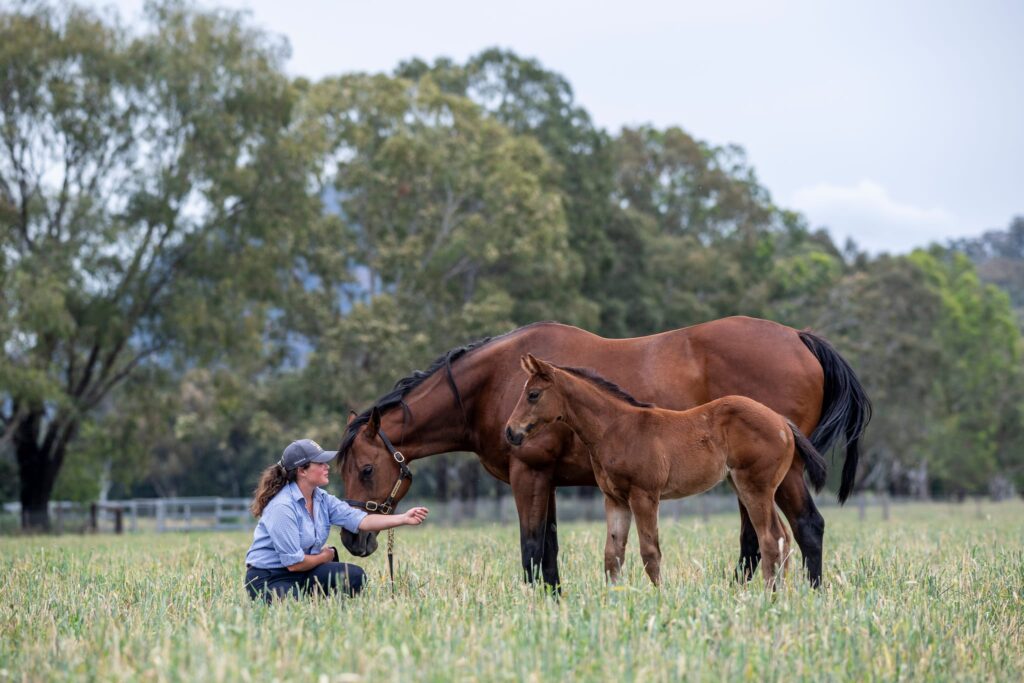
The challenge of infertility in mares, particularly older ones, may soon have a new solution. Professor Christopher Grupen from the University of Sydney is spearheading an AgriFutures Australia project that explores the effects of niacin supplementation on egg quality in older mares. This innovative research could potentially revolutionize breeding practices.
As breeding seasons draw to a close, the sight of an empty mare at a 14-day scan is a disheartening one for breeders. Older mares, in particular, face difficulties in conception, necessitating new strategies to improve their fertility. The research team, comprising experts from the University of Sydney, the University of Newcastle, and Charles Sturt University, is investigating niacin as a potential game-changer.
The Science Behind Niacin
Niacin, or vitamin B3, transforms into nicotinamide adenine dinucleotide (NAD) within the body, a compound crucial for various cellular functions. Research in other species, including humans and mice, shows that NAD levels decline with age, impacting fertility.
“There’s mounting evidence in other species, including humans and mice, that the levels of this important factor NAD decline as we advance in age,” said University of Sydney’s Professor Christopher Grupen.
Professor Grupen, who leads the Gamete and Embryo Technologies Group at the University of Sydney, has spent over three decades researching reproductive technologies. He notes that NAD is essential for energy production, immune response, and DNA repair. Studies have shown that declining NAD levels can affect egg quality, prompting the hypothesis that increasing NAD might improve fertility in horses.
Initial Trials and Findings
The research team conducted an initial trial in late 2023, supplementing nicotinic acid in the diets of Standardbred mares aged 15 or older. The trial aimed to determine how well nicotinic acid was absorbed and converted into NAD. The mares were divided into groups, with one receiving no supplement, another receiving 1.5g of nicotinic acid per day, and a third receiving 3g per day.
“We were quite amazed by the metabolite changes, especially in the follicular fluid,” said Grupen, highlighting the successful absorption and conversion of nicotinic acid into NAD.
These promising results mirrored previous laboratory studies on pigs, where niacin supplementation showed slight improvements in egg quality. The team hypothesized that a short supplementation window might suffice to enhance egg quality before ovulation.
Field Testing in the Hunter Valley
The next phase of research involves a large-scale study in the Hunter Valley, engaging multiple studs to assess whether increased NAD production positively affects conception rates. Mares aged 15 and older receive niacin as an oral paste for four to eight days leading up to ovulation.
“We’ve partnered with a number of studs in the Hunter Valley and tried to recruit as many mares as possible, because if it’s only a small beneficial effect, we need large numbers of animals to be able to detect that,” Grupen explained.
The study aims to determine if niacin supplementation can lead to higher pregnancy rates and fewer cycles needed for successful conception, thereby improving animal welfare and reducing breeding costs.
Potential Implications for the Industry
If successful, niacin supplementation could become a staple in breeding management, offering a safe and effective way to enhance fertility in older mares. Professor Grupen emphasizes the importance of scientific validation for supplements, which often lack specific studies to back their claims.
“The good thing about niacin is that we know it’s very safe, it’s tolerated very well by the horses, and if it is in excess, it’s cleared from the body pretty quickly in the urine,” Grupen noted.
Looking ahead, niacin could become a critical component of farm management strategies, with potential benefits extending beyond fertility to overall health and immune response. Professor Grupen remains optimistic about the future impact of this research.
“I’ve been doing research in this space for 30 years and this is probably one of the most exciting advancements I’ve seen,” he said. “I am hopeful that in five years’ time, everyone will understand the importance of this as a supplement.”
While the current focus is on older mares, there is potential for niacin to aid mares with poor reproductive histories due to various factors. As the research progresses, the equine breeding industry eagerly awaits the results, which could redefine fertility management for mares worldwide.