



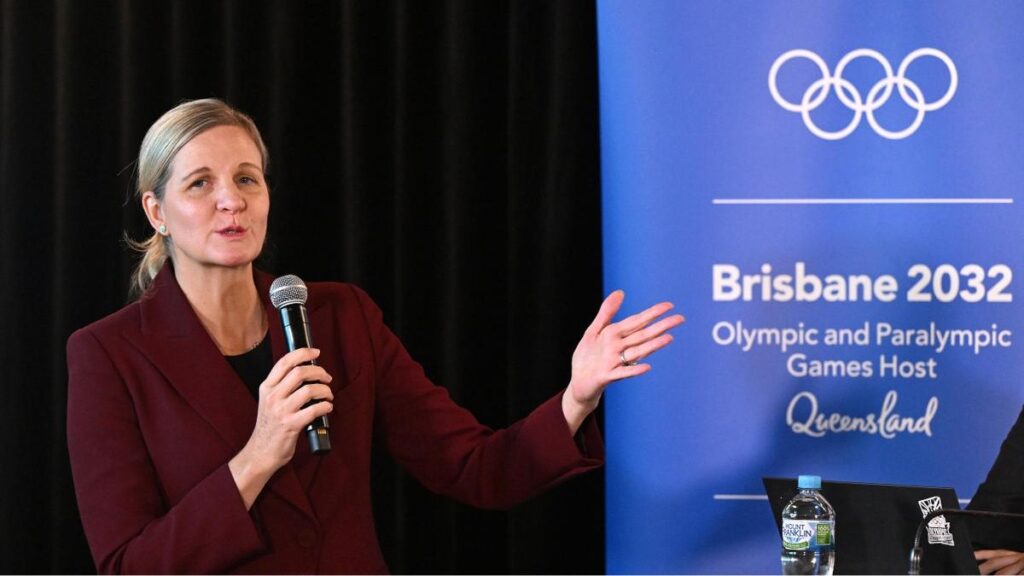
Transgender women may soon face a ban from competing in the Olympics, following a potential rule change by the International Olympic Committee (IOC). This significant shift is anticipated to be announced next year, marking the first major policy under the leadership of new president Kirsty Coventry, a two-time Olympic swimming gold medalist. The rule change is expected to be implemented before the Los Angeles 2028 Olympics.
This development comes amid a broader political and social debate, with U.S. President Donald Trump vocally opposing transgender women in sports since his return to office. The IOC, under Coventry’s guidance, aims to unify the Games by addressing contentious eligibility rules that currently vary across Olympic sports.
Scientific Findings and Policy Discussions
The IOC’s medical and scientific director, Dr. Jane Thornton, has presented initial findings to the committee, described as “scientific, factual, dispassionate and unemotional.” According to reports, Thornton’s evidence suggests that athletes who have undergone male puberty retain competitive advantages over female athletes, even after testosterone-reduction treatments.
“An update was given by the IOC’s director of health, medicine and science to the IOC members last week during the IOC commission meetings,” the IOC stated. “The working group is continuing its discussions on this topic and no decisions have been taken yet. Further information will be provided in due course.”
While no official decision has been made, the IOC is cautious about rushing into rule changes that could provoke legal challenges, particularly concerning athletes with differences of sexual development (DSD). Gender testing and eligibility have been contentious issues, as seen in the Paris 2024 Olympics.
Historical Context and Previous Controversies
Gender eligibility in sports has been a flashpoint in recent Olympic history. During the Paris 2024 Games, athletes like Imane Khelif and Lin Yu-Ting faced intense scrutiny. Both won boxing gold medals amidst controversy over eligibility tests. The International Boxing Association (IBA), previously overseeing Olympic boxing, had disqualified them from the 2023 world championships, citing unspecified eligibility failures.
The IBA’s history of misdeeds led to its exclusion, with the IOC taking over boxing tournaments and applying existing sex eligibility rules. Khelif and Lin, who are not transgender, were allowed to compete under these standards. However, World Boxing, which will manage the sport in 2028, has since mandated sex testing for all competitors, leading to Khelif’s exclusion from future championships pending an appeal.
Notably, New Zealand weightlifter Laurel Hubbard became the first openly transgender woman to compete in the Olympics during the Tokyo 2021 Games. Despite her groundbreaking participation, Hubbard did not complete her lifts, finishing last in her division.
Global Sports Policies and Future Implications
Several sports organizations have already enacted bans on transgender women or those who transitioned post-puberty. World Rugby, World Athletics, and World Aquatics are among those enforcing such policies. These decisions reflect ongoing debates about fairness, inclusion, and the integrity of women’s sports.
The IOC’s potential policy shift represents a significant moment in the intersection of sports, gender identity, and science. As discussions continue, the committee faces the challenge of balancing inclusivity with competitive fairness. The outcome of these deliberations could set a precedent for future Olympic Games and influence broader sports policies worldwide.
As the world watches, the IOC’s decision will likely have far-reaching consequences, impacting athletes, sports organizations, and the global conversation on gender and sports. Further updates are expected as the IOC continues its evaluation and consultation process.