




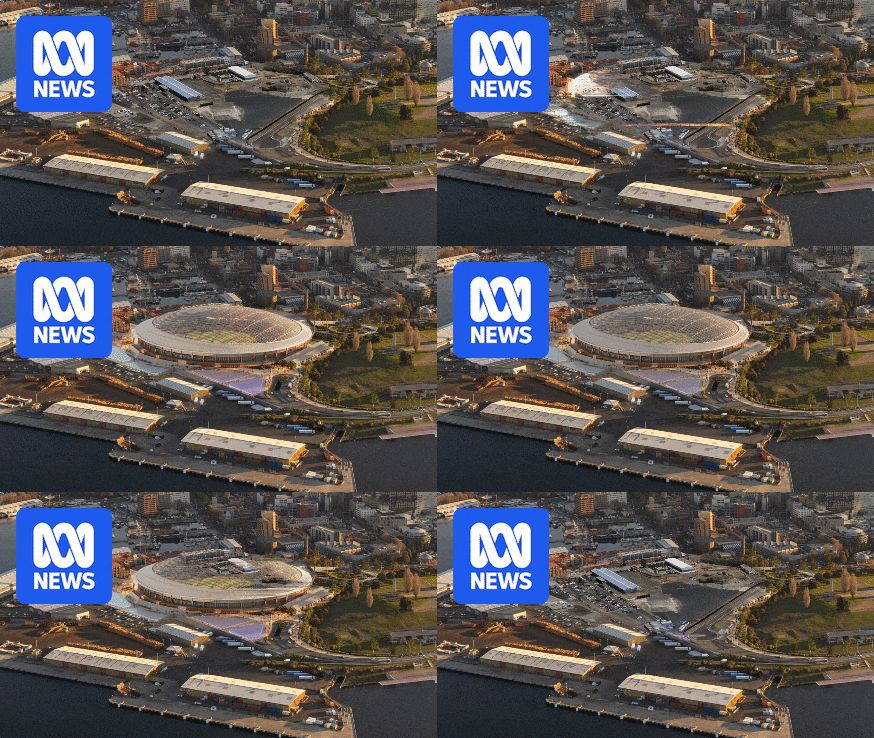
Since its inception, the proposed stadium project at Macquarie Point has ignited a fierce debate within the Hobart community, torn between the allure of development and the preservation of its historic waterfront. In just a few days, the Tasmanian parliament will cast a decisive vote that could reshape the face of Hobart forever.
A ‘Yes’ vote would not only transform the city’s skyline but also pave the way for Tasmania to secure an AFL team, a move seen as a significant leap forward by many residents. Emily Mifsud, a 30-year-old player for the North Hobart Football Club, believes the stadium is essential for Tasmania’s future. “If this doesn’t go ahead now, I don’t think it’s ever going to go ahead,” she says. “We’re in the best position for this to happen.”
The Stakes: Development vs. Preservation
The proposed stadium, with a projected cost of $1.13 billion, has seen its budget swell from an initial $715 million in 2022. A roofed stadium at Macquarie Point is a prerequisite for the Tasmania Devils to secure an AFL licence. Mifsud argues that the stadium would offer invaluable sporting opportunities across various codes, including cricket, and host concerts and cultural events.
However, not everyone shares her enthusiasm. RSL Tasmania president Mike Gallagher views the decision as a matter of respect for the past. The Hobart Cenotaph, a monument honoring Tasmanian service people, turns 100 this December. Gallagher fears the stadium will disrupt the Cenotaph’s ambience and block significant sightlines.
Financial Implications and Economic Concerns
The financial burden of the stadium is a contentious issue. The Tasmanian government has pledged to cap its capital expenditure at $375 million, with an additional $240 million from the federal government and $15 million from the AFL. The remaining $490.7 million will be borrowed by the state-owned Macquarie Point Development Corporation.
Critics argue the state cannot afford such a venture. A Tasmanian Planning Commission panel forecast the stadium would add $1.8 billion to the state’s debt over a decade. The panel, which recommended against the project, warned of high costs and low returns, suggesting it would “diminish the economic welfare of Tasmanians as a whole.”
Community Voices: Opportunities and Challenges
Publican Ben Hickey fears Tasmania could become known as the “No” state if the vote fails. Owner of a popular pub in Salamanca, Hickey sees the stadium as a boon for Hobart’s hospitality sector, akin to the impact of the winter arts and music festival Dark Mofo. “The football would have a remarkably similar effect on the city,” he notes.
Meanwhile, architectural historian Warwick Oakman is concerned about preserving the past. Macquarie Point, used by the Muwinina people for thousands of years, has a rich history. Oakman argues the stadium is “totally at odds” with the area’s heritage, fearing it will dominate Hobart’s urban landscape.
Transport and Infrastructure Concerns
The stadium’s impact on Hobart’s transport system is another point of contention. Alison Hetherington, an avid cyclist, questions whether the city’s infrastructure can handle the influx of 23,000 fans. “It’s hard to see how Hobart’s transport system could handle a huge glut of congestion,” she says.
The Macquarie Point Development Corporation plans for transportation upgrades, including a rapid bus network and ferry terminal, to coincide with the stadium’s completion. Hetherington emphasizes the need for these improvements for the stadium’s success.
As the stadium order heads to the upper house for debate, the vote on Thursday will determine the trajectory of Hobart’s future. The decision will either close the door on one vision for the city or open another, setting the stage for Tasmania’s next chapter.