




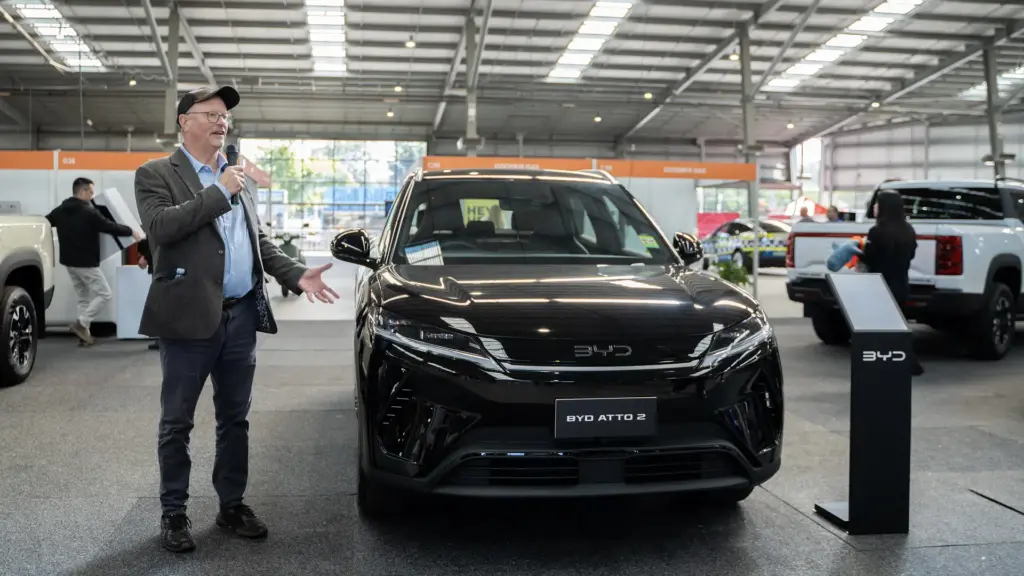
Speeding up access to the technology that allows electric vehicles to power homes is “critically important” for the transition to renewable energy, according to Robert Llewellyn, a prominent advocate for clean energy. Llewellyn, founder of the Everything Electric expo, expressed frustration over the slow adoption of vehicle-to-grid (V2G) and vehicle-to-home (V2H) technologies.
“I remember going to discussions about V2G in 2012 and thinking, ‘Oh, that’s brilliant’. Yet, even now, it’s still not there yet,” Llewellyn shared with Drive. He emphasized the potential of V2G technology to transform electric vehicles into valuable assets, rather than just stationary objects when not in use.
Australia’s Solar Advantage and V2G Challenges
Australia boasts one of the highest rates of rooftop solar installations globally, with four million systems installed by late 2024, equating to roughly one in three homes. This widespread adoption positions the country as a natural leader in the transition to renewable energy. However, the rollout of V2G technology has been sluggish, hindered by the need for regulatory approvals, car manufacturer permissions, and agreements with power network operators.
Llewellyn, known for his roles in British TV shows like Red Dwarf and Scrapheap Challenge, believes that accelerating V2G access is crucial. “It’s going to make a massive difference,” he stated, citing the dual benefits of reducing household energy costs and promoting environmental sustainability.
“If you’ve got an electric car, it’s a giant battery on wheels,” Llewellyn noted. “You could plug it into your house and run your cooker, freezer, and everything else when electricity is expensive.”
V2G in Practice: Trials and Tribulations
While the concept of selling power back to the grid is appealing, Llewellyn stressed that most people are more interested in using their vehicles to power their homes. This practical application could reduce reliance on the grid, provide backup during blackouts, and even generate income.
At the Everything Electric event, panellists discussed the abstract nature of V2G, which many still struggle to understand. Daniel Bleakley, Co-Founder and Co-CEO of New Energy Transport, echoed Llewellyn’s sentiments, emphasizing the importance of mainstreaming V2G to facilitate the transition to electric vehicles.
South Australia was the first state to widely offer V2G in 2024, with Victoria and New South Wales following suit, albeit through limited trials. AGL’s 12-month trial, for example, is open to select Hyundai, Kia, BYD, and Zeekr vehicles across major national electricity markets.
According to Kia, its EV3, EV6, and EV9 models offer V2G as part of the trial, although warranty coverage for owners using the tech outside the trial is uncertain.
The Path Forward: Regulatory and Market Developments
In a significant move, the Federal Government approved regulatory standards for V2G in 2023, paving the way for bi-directional chargers to receive certification from the Clean Energy Council. As a result, a limited number of chargers are now available, with more expected as approvals are granted.
Charging provider Revcharge is leading the charge by introducing two V2G chargers to the market: the Starcharge Halo and the V2G Numbat, both available for purchase without the need for trials or waiting lists. However, the availability of compatible vehicles remains a bottleneck.
Currently, only a few electric and plug-in hybrid vehicles in Australia support V2G, including the Nissan Leaf and Mitsubishi Outlander. While more models have the necessary hardware, unlocking the technology requires legal chargers and software updates.
Overseas trials by AmbiBox suggest that most EVs are capable of V2G, though car manufacturers have yet to confirm this publicly.
Mercedes-Benz, for instance, has launched bi-directional charging in Europe, with plans to introduce V2G and V2H capabilities in Australia with the new CLA and GLC electric models next year.
Implications and Future Prospects
The integration of V2G technology represents a significant step forward in the renewable energy landscape. By transforming electric vehicles into mobile energy assets, V2G has the potential to reduce peak electricity demand and enhance grid stability. As more vehicles and chargers become compatible, the widespread adoption of this technology could revolutionize how energy is consumed and managed.
Looking ahead, the continued collaboration between governments, car manufacturers, and energy providers will be essential to overcoming current barriers. As regulatory frameworks evolve and consumer awareness grows, V2G technology could soon become a standard feature of the electric vehicle experience, driving both environmental and economic benefits.