



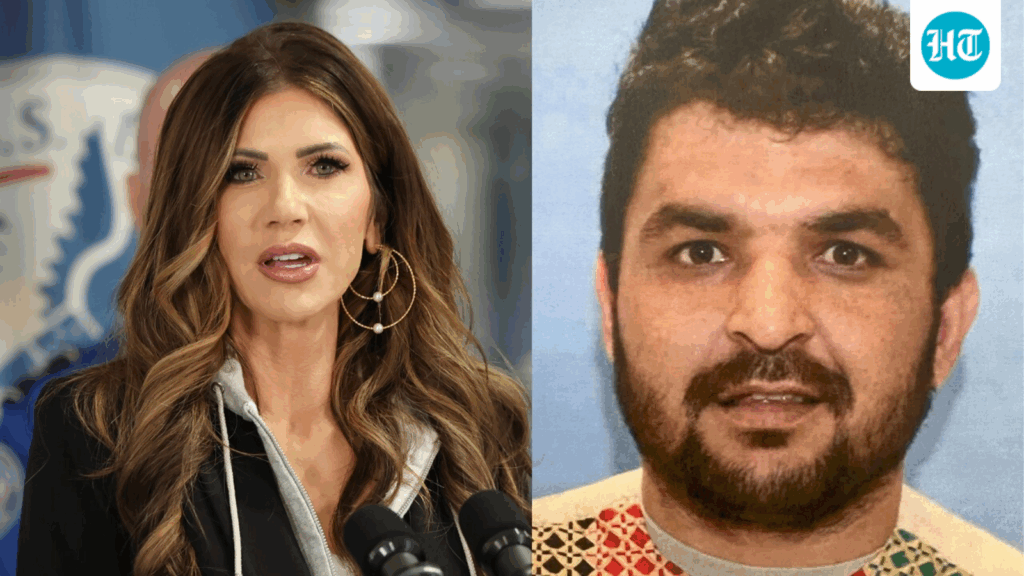
Federal authorities are piecing together the motives behind a shooting near the White House, allegedly carried out by Rahmanullah Lakanwal, an Afghan national. Homeland Security Chief Kristi Noem stated on NBC that investigators are still constructing a comprehensive profile of the suspect, who is believed to have been radicalized after arriving in the United States.
“We believe he was radicalized since he’s been here in this country,” Noem said, emphasizing that his “home community and state” may have influenced his actions. Officials are actively interviewing family members and associates, with Noem noting, “So far we’ve had some participation.”
Profile of the Afghan Suspect
Lakanwal, 29, previously collaborated with US forces and the CIA in Afghanistan before emigrating to the US in 2021, according to Bloomberg. He was apprehended shortly after the shooting on Wednesday, which occurred just a few blocks from the White House. The investigation spans multiple states, including Washington, where Lakanwal resided with his family, and California.
Authorities allege that Lakanwal drove across the country to execute the attack. While the incident is being treated as a terror case, officials have not publicly disclosed a specific motive. Noem refrained from detailing how Lakanwal might have been radicalized.
The Impact of the Shooting
The attack resulted in the shooting of two West Virginia National Guard members. US Army Specialist Sarah Beckstrom, 20, succumbed to her injuries on Thursday, while US Air Force Staff Sergeant Andrew Wolfe, 24, remains hospitalized. Jeanine Pirro, the US Attorney for the District of Columbia, announced that Lakanwal will face charges including first-degree murder. US Attorney General Pam Bondi has indicated that the prosecution will seek the death penalty.
Political Repercussions and Immigration Debate
The shooting has ignited a fierce political debate in Washington. President Donald Trump, Vice President JD Vance, and other administration officials have criticized the Biden administration for permitting Lakanwal’s entry into the US, leveraging the incident to advocate for stricter immigration policies.
The Trump administration has already suspended reviews of Afghan immigration cases and ordered a renewed examination of Afghans who have been admitted, potentially limiting settlement rights for Afghan allies of the US. On November 27, Trump pledged to permanently halt migration from “all Third World Countries,” terminate what he described as “illegal admissions” under Biden, and end federal benefits for non-citizens. He also vowed to deport foreign nationals deemed security risks and “denaturalize migrants who undermine domestic tranquility.”
Historical Context and Expert Opinions
This development follows a historical pattern of immigration-related security concerns in the US. Experts argue that while security is paramount, blanket policies can undermine the contributions of immigrants who have supported US efforts abroad. Dr. Emily Carter, a political analyst at Georgetown University, noted, “The challenge is balancing national security with the humanitarian obligations to those who have risked their lives for US interests.”
Meanwhile, the incident underscores the complexities of radicalization, particularly among individuals who have experienced significant cultural transitions. According to Dr. Ahmed Khan, a counterterrorism expert, “Radicalization is often a multifaceted process influenced by personal, social, and political factors.”
Looking Ahead
As the investigation continues, authorities are expected to release more details about Lakanwal’s background and potential connections. The case may also influence future policies regarding immigration and national security, with lawmakers divided on the best path forward.
The broader implications of this incident could shape the political landscape, particularly as the US grapples with the dual imperatives of security and humanitarian responsibility. Observers will be watching closely to see how these issues are addressed in upcoming legislative sessions.
