




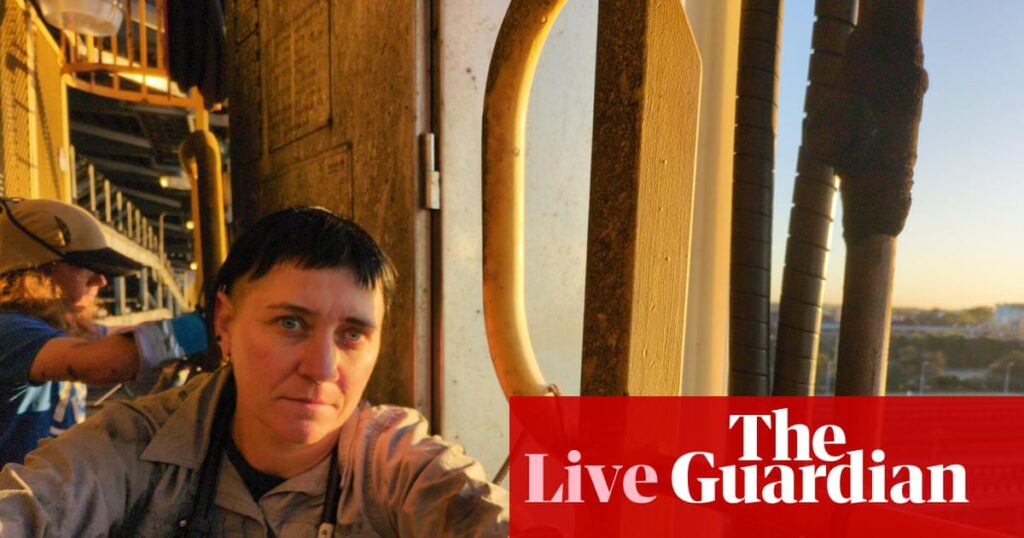
In a bold demonstration of climate activism, sixteen protesters from the group Rising Tide have locked themselves to coal equipment in Newcastle, Australia. This action marks the final day of the People’s Blockade, an annual protest drawing thousands to oppose fossil fuel usage. The activists targeted two coal loaders and conveyor belts, signaling their discontent with ongoing coal and gas projects.
Fiona Lee, one of the activists, expressed her frustration, stating she could “not stand by as our government continues to approve the new coal and gas projects that are making these unnatural disasters worse.” She emphasized the need for governmental support in transitioning coal workers to new industries and holding coal corporations accountable.
New South Wales police have arrested at least 141 individuals over the weekend in connection with the protests. However, no new arrests have been reported this morning.
Energy Grid Stability at Risk
As the protests unfold, the Australian Energy Market Operator (Aemo) has issued a report warning of potential instability in the energy grid if the Eraring coal power plant closes as scheduled in 2027. The report highlights the urgent need for investment in new energy infrastructure, particularly synchronous generators, to maintain system security.
These generators, which include coal, gas, and hydro plants, are essential for providing the frequency and inertia required to keep the grid operational. With the rise of solar and wind energy, alternative sources such as synchronous condensers will be necessary to stabilize the system.
“If Eraring shuts before enough synchronous condensers are operational, the market operator may need to intervene, potentially leading to significant costs for consumers,” the report cautions.
Unusually Prolonged Flu Season in New South Wales
Meanwhile, New South Wales is grappling with an unusually prolonged flu season, impacting hospitals across the state. Over 370 individuals have presented with influenza-like symptoms in emergency departments, with more than 3,100 cases reported in a single week in mid-November.
Dr. Kerry Chant, the NSW Chief Health Officer, noted the extended duration of the flu season, stating, “We are experiencing a longer tail, which is a concern.” She urged the public to take preventive measures, including vaccination and wearing masks if symptomatic.
Urgent Bushfire Warnings in Western Australia
In Western Australia, an out-of-control bushfire is threatening homes in Geraldton, prompting emergency warnings for residents in Bluff Point, Spalding, and Sunset. The Department of Fire and Emergency Services has issued evacuation orders, emphasizing the immediate danger to lives and properties.
“You are in danger and need to act immediately to survive. There is a threat to lives and homes,” the warning states.
Political and Economic Developments
In other news, Victoria’s Premier Jacinta Allan has publicly rejected divisive politics following a speech by One Nation’s Pauline Hanson at an anti-immigration protest. Allan emphasized that such division is unwelcome in Victoria, highlighting the state’s commitment to inclusivity.
On the economic front, surging home prices are eroding the benefits of recent interest rate cuts for new buyers. Property analytics firm Cotality reports a 1% increase in home values in November, with the median dwelling now valued at $888,941. This rise has outpaced the increased borrowing capacity afforded by interest rate cuts.
Tim Lawless, Cotality’s research director, noted, “The cuts increased borrowing capacity by $55,000, but home values have risen by $60,000.”
As these diverse issues unfold across Australia, they underscore the complex interplay between environmental activism, energy policy, public health, and economic stability. The coming weeks will likely see continued debate and action as stakeholders navigate these challenges.