




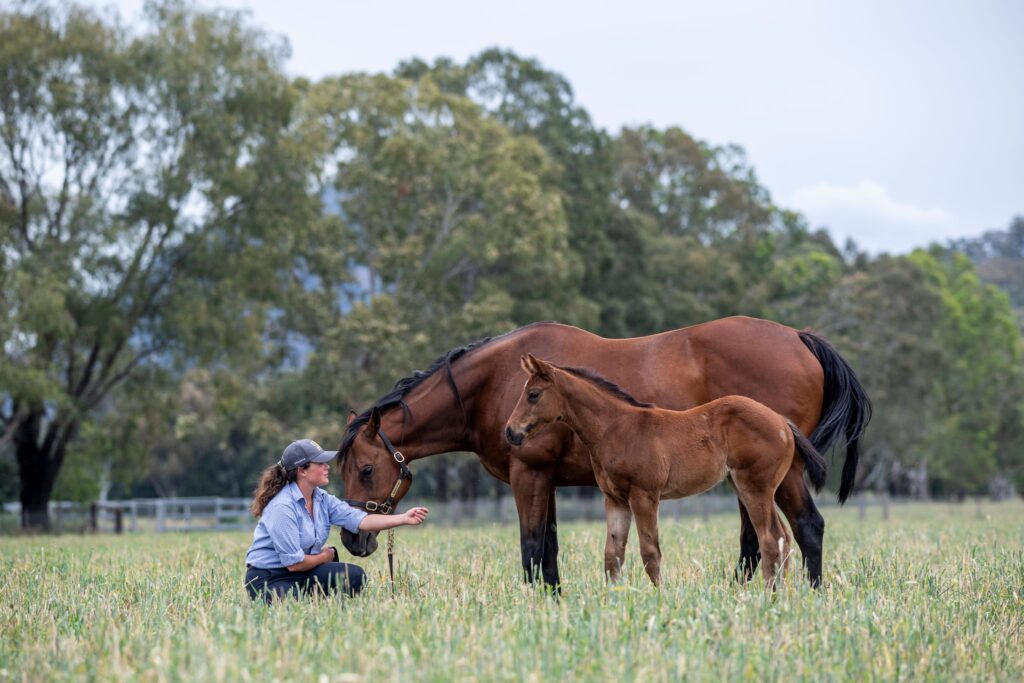
In a groundbreaking study, researchers from the University of Sydney are exploring the potential of niacin supplementation to enhance egg quality in older mares, a development that could revolutionize equine breeding practices. Supported by AgriFutures Australia, this research could provide a much-needed solution for stud farms facing challenges with mare fertility as the breeding season winds down.
The study, led by Professor Christopher Grupen, focuses on the effects of niacin, or vitamin B3, on the reproductive capabilities of older mares. The project aims to address the frustration of empty mares at the 14-day scan, a common issue that becomes more pronounced as mares age.
The Science Behind Niacin
Niacin’s role in fertility is linked to its conversion into nicotinamide adenine dinucleotide (NAD), a crucial cellular component. NAD is a key regulator of many cellular processes, including energy production, the immune response, and DNA repair, according to Professor Grupen. Studies in humans and mice have shown that NAD levels decline with age, impacting female fertility and egg quality.
Professor Grupen, who heads the Gamete and Embryo Technologies Group at the University of Sydney, has been researching reproductive technologies for over three decades. His team hypothesizes that increasing NAD levels in mares could improve egg quality and conception rates, drawing parallels from successful mouse studies.
Initial Trials and Promising Results
In late 2023, the research team conducted an initial trial involving Standardbred mares aged 15 or older. The mares were divided into groups receiving different doses of nicotinic acid, a form of niacin, to assess its absorption and conversion to NAD.
“We were quite amazed by the metabolite changes, especially in the follicular fluid,” said Grupen, highlighting the successful absorption and conversion of nicotinic acid into NAD.
These results mirrored previous in vitro studies with pigs, where nicotinic acid supplementation showed slight improvements in egg quality. The team is optimistic that a short supplementation window could suffice, given the rapid expansion of follicular fluid surrounding the egg before ovulation.
Field Study in the Hunter Valley
The next phase of the research involves a large-scale study in the Hunter Valley, engaging multiple studs to evaluate the impact of increased NAD production on conception rates.
“We’ve partnered with a number of studs in the Hunter Valley and tried to recruit as many mares as possible,” Grupen explained, emphasizing the need for large sample sizes to detect even small beneficial effects.
Mares in the study, aged 15 years or older, receive niacin supplementation as an oral paste for four to eight days leading up to ovulation. This approach allows studs to maintain their normal breeding operations while potentially enhancing fertility outcomes.
Implications for the Equine Industry
If successful, niacin supplementation could significantly improve pregnancy rates and reduce the number of mating cycles needed, benefiting both animal welfare and farm economics.
“It would improve the welfare of the animals, as well as reduce the cost and time spent by management to get these mares in foal,” noted Grupen.
The safety profile of niacin, which is well-tolerated by horses and quickly cleared from the body, adds to its appeal as a potential supplement. Grupen hopes that positive results will lead to widespread adoption and further research into niacin’s benefits for mares with poor reproductive histories.
As the study progresses, the equine industry awaits the results with anticipation. Should niacin prove to be a game-changer, it could become a staple in breeding management, offering a scientifically-backed solution to a longstanding challenge.
Professor Grupen remains cautiously optimistic, stating,
“I’ve been doing research in this space for 30 years and this is probably one of the most exciting advancements I’ve seen.”
The potential for niacin to improve fertility in older mares could mark a significant advancement in equine reproductive science, with implications that extend beyond the current study.