



Airbus has issued a significant recall affecting approximately 6,000 operational A320 aircraft worldwide, warning of potential travel disruptions as airlines work to implement necessary software upgrades. This recall impacts travelers in Australia and across the globe, following a critical incident involving a JetBlue-operated A320 on October 30.
The European aerospace giant has instructed its clients to take “immediate precautionary action” after an evaluation of the incident, which saw a JetBlue aircraft experience an in-flight control problem. As a result, airlines are facing operational challenges as they work to update the affected aircraft.
Impact on Australian Airlines
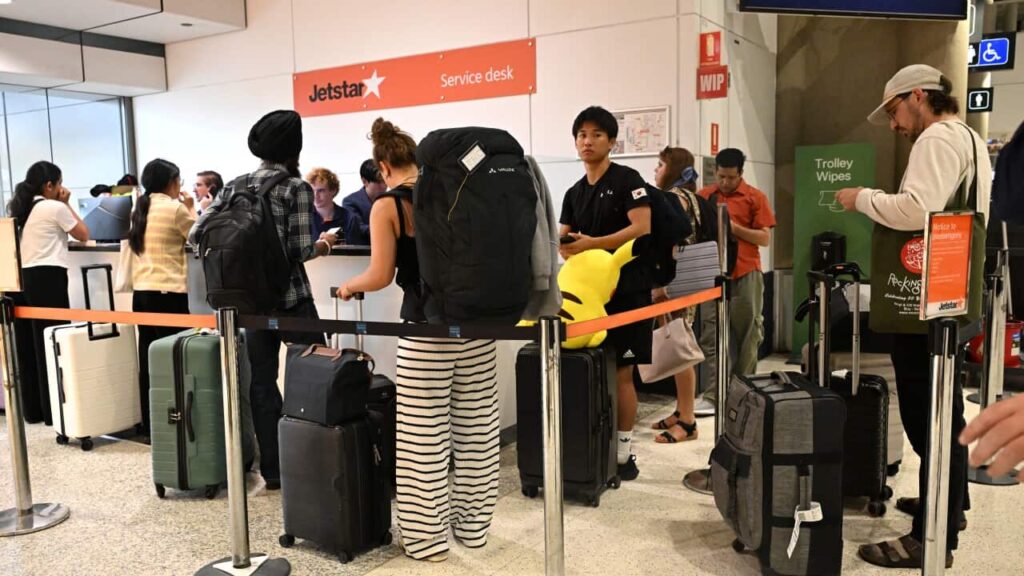
In Australia, Jetstar’s chief pilot, Tyrone Simes, confirmed that the airline’s flights are affected by the recall. During a press conference at Melbourne Airport, Simes explained that the engineering team needs to physically update the software on board the aircraft, a process expected to take two to three hours per plane.
“We’ve got about 90 flights affected. And of course, that’s just Jetstar. But it’s important to note that it is a worldwide issue,” Simes stated. He added that 34 of Jetstar’s 85 A320 planes have the identified software anomaly.
By Saturday afternoon, Jetstar announced that 20 of the 34 affected aircraft were ready to return to service, with the remaining expected to be operational by Sunday, November 30. However, the airline warned of potential delays as the network recovers.
“Safety is our number one priority, and we sincerely thank our customers for their patience and understanding as we worked through this issue,” a Jetstar spokesperson said.
Meanwhile, Virgin Australia, which operates four A320s in its regional airline business, reported no anticipated impact on its operations. Similarly, Qantas flights remain unaffected by the recall.
Global Airline Response
The recall’s impact extends far beyond Australia, affecting airlines from the United States to South America, Europe, India, and New Zealand. Air New Zealand reported disruptions across its A320neo fleet, while American Airlines, the world’s largest A320 operator, is addressing the issue across 340 of its 480 A320 aircraft.
Japan’s ANA Holdings canceled 65 flights on Saturday due to the recall, while other airlines, including Lufthansa and IndiGo, are briefly grounding planes to carry out repairs. Britain’s easyJet has already completed the necessary work, while Colombian carrier Avianca faces significant disruptions, affecting over 70 percent of its fleet.
For about two-thirds of the affected jets, the recall will theoretically result in a brief grounding as airlines revert to a previous software version, industry sources have told Reuters.
Reason Behind the Recall
The recall, one of the largest in Airbus’s 55-year history, comes shortly after the A320 surpassed the Boeing 737 as the most-delivered aircraft model. Airbus identified a software issue in the Elevator and Aileron Computer (ELAC), made by Thales, which could be compromised by intense solar radiation, affecting flight control data.
Airbus acknowledged the recall would lead to operational disruptions, apologizing for the inconvenience caused to passengers and customers. The company stated that while most planes would require only a few hours for the software update, approximately 1,000 aircraft might take weeks to rectify.
The JetBlue Incident
The recall follows a concerning incident on October 30, when a JetBlue-operated A320 experienced an in-flight control problem, causing the aircraft to nosedive between Cancun and Newark. Pilots managed to land safely in Tampa, Florida, but not before some passengers sustained injuries.
With the A320 being the best-selling aircraft globally, having sold 12,257 units by the end of September, the recall underscores the critical importance of ensuring flight safety and operational integrity across the fleet.
As airlines worldwide rush to implement the necessary software updates, passengers are advised to stay informed about potential flight disruptions and maintain communication with their respective airlines for the latest updates.