



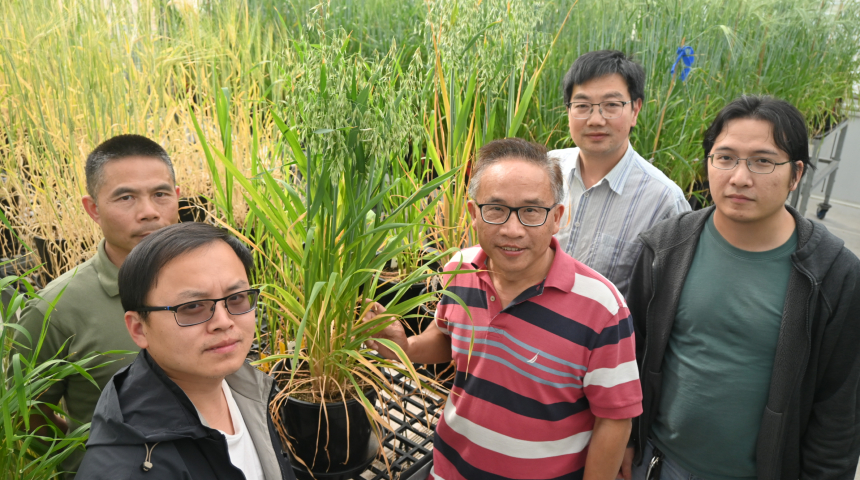
Researchers from Murdoch University have made a groundbreaking discovery in the field of oat genetics, identifying key traits that influence oat yield, plant health, and adaptability to environmental conditions. This significant advancement is part of a larger international effort known as the PanOat Project, which aims to decode the complex genome of oats.
The study reveals that despite substantial gene loss in one of the three oat subgenomes, the plants maintain high productivity levels. This is due to the presence of other gene copies that compensate for the missing functions. Additionally, the researchers found that structural rearrangements in the oat genome, such as inversions and translocations, are linked to environmental adaptation and have likely played a vital role in oat domestication and the development of reproductive barriers between different populations.
Transforming Oats from a Genetic ‘Black Box’
Professor Li, a leading scientist in the project, emphasized the importance of this research in a recent statement:
“This research, which sees the international oat research community come together to crack a particularly challenging genetic puzzle, transforms oats from a genetic ‘black box’ into a blueprint that will enable precision breeding for a healthier, more sustainable food future.”
In the context of Australian agriculture, the discovery of specific genetic signatures for adaptation, such as the 2A/2C gene translocation in Australian oats, highlights how crops naturally evolve to thrive in diverse environments. Professor Li further explained,
“With this knowledge, we can help Australian breeders select or develop varieties optimised for specific regions, and speed up the development of improved, more resilient oat varieties.”
Implications for Global Agriculture and Health
The decoded oat pangenome represents a major leap forward in modern genomics research, with significant implications for crop breeding, agricultural production, and human health. Dr. Kaara Klepper, DPIRD Broadacre Systems Executive Director, noted the broader impact:
“The decoded oat pangenome epitomises how modern genomics research is stimulating leaps in crop breeding, agricultural production and human health by providing novel genetic resources to underpin new varieties with improved yields, better environmental adaptation and enhanced nutrition.”
This global research effort, in which DPIRD and Murdoch University scientists played a crucial role, will help Western Australian growers produce high-performance, resilient crops suited to a changing climate, thereby boosting sustainability and profitability.
The Collaborative Effort Behind the Discovery
The PanOat Project is a collaborative endeavor involving multiple research teams, including the Western Crop Genetics Alliance (WCGA), a partnership between Murdoch University and the WA Department of Primary Industries and Regional Development. The Australian component of the project is jointly funded by the Grains Research and Development Corporation (GRDC), the WA Oat Industry partnership, DPIRD, and Murdoch University. The Pawsey Supercomputing Centre provided the necessary computing resources for this complex research.
This development follows years of dedicated research and collaboration among international scientists, aiming to unlock the genetic secrets of oats. The project not only advances our understanding of oat genetics but also sets the stage for future innovations in crop breeding and sustainable agriculture.
As the world faces increasing challenges related to climate change and food security, such scientific breakthroughs are crucial. The insights gained from this research could lead to the development of oat varieties that are more resilient to environmental stresses, ultimately contributing to global food security and sustainability.
Looking ahead, the knowledge gained from the PanOat Project will be instrumental in guiding future research and breeding programs. By leveraging these genetic insights, scientists and breeders can work towards creating oat varieties that meet the demands of a growing population while ensuring environmental sustainability.