




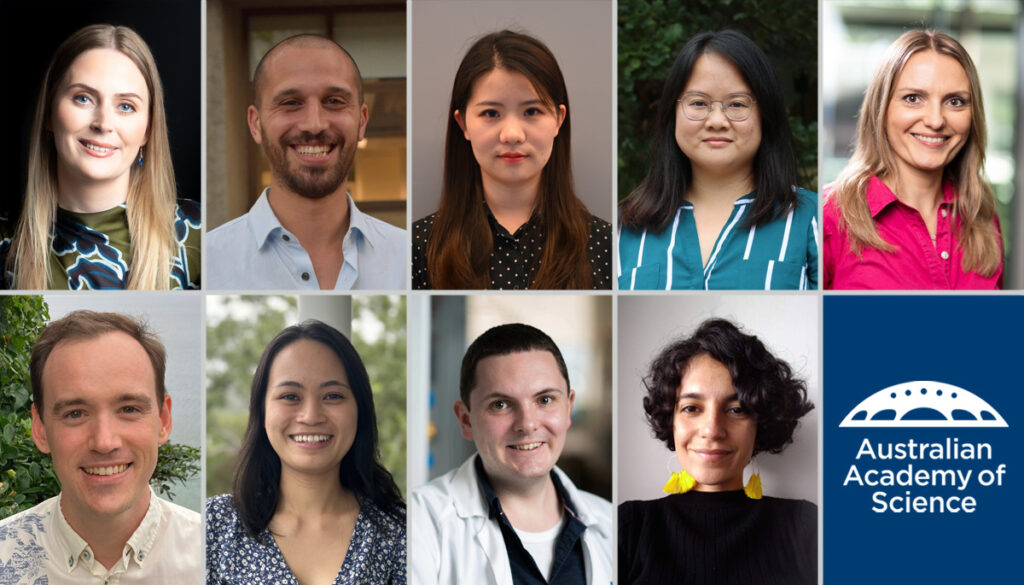
In a significant boost to environmental research, nine early and mid-career researchers (EMCRs) have been awarded the 2026 Thomas Davies Research Grant for Marine, Soil, and Plant Biology. This prestigious annual grant offers up to $20,000 to support groundbreaking projects in these critical fields.
The latest awardees represent a diverse array of projects, each tackling pressing environmental challenges. From restoring Eucalyptus forests threatened by climate change to decoding the complex interactions between marine microalgae and bacteria, these researchers are at the forefront of scientific innovation.
Restoring Eucalyptus Forests Amid Climate Change
Dr. Ashley Jones of the Australian National University is focusing on the alarming dieback of Eucalyptus forests across Australia, a phenomenon accelerated by climate change. Using genomic sequencing, Dr. Jones aims to identify Eucalyptus seeds that can adapt to future climates, thus guiding climate-resilient forest restoration efforts.
“We can use genomics to guide climate-resilient forest restoration across Australia,” Dr. Jones said. “Through collaboration with industry and Landcare partners, this research will contribute to preserving Australia’s iconic forests and their dependent wildlife for future generations.”
Exploring Ocean Health and Productivity
Meanwhile, Dr. Ben Clifton from the University of Western Australia is delving into the intricate relationships between marine microalgae and bacteria. His work seeks to develop new methods to decode chemical signals in marine ecosystems, which could be pivotal in predicting and managing algal blooms.
“I hope to discover new naturally occurring chemicals that can be used to promote growth of beneficial algae and prevent growth of harmful algae,” Dr. Clifton explained.
Tackling Persistent Environmental Pollutants
Dr. Elena Eremeeva of the Queensland University of Technology is addressing pollution from PFAS, often referred to as “forever chemicals” due to their persistence in the environment and human bodies. Her project aims to translate laboratory discoveries into practical solutions for environmental monitoring and cleanup.
“This is a step toward the development of deployable sensors with commercial potential for rapid environmental monitoring and clean-up of persistent PFAS pollutants,” she said.
Understanding the Impact of Microplastics
Dr. Huan Liu from the University of Technology Sydney is investigating the effects of microplastics in agriculture. With biosolids used to improve soil fertility often contaminated with microplastics, her research addresses the potential health risks posed by these particles entering the food chain.
“The environmental impacts of microplastics in plants is a topic of increasing global concern,” Dr. Liu noted.
Conserving Endangered Plants Amid Climate Extremes
At Adelaide University, Dr. Ilaine Silveira Matos is studying how Australian native plants, particularly endangered species, cope with climate change-induced heat, drought, and fire. Her work aims to develop a framework that predicts plant responses to these environmental stresses.
“We want to address this critical knowledge gap to guide conservation in the context of climate change,” Dr. Silveira Matos said.
Decoding Antarctic Ice Melt Through Octopus Genomes
Dr. Sally Lau of James Cook University is harnessing the genetic information of Antarctic octopuses to understand historical changes in the East Antarctic Ice Sheet (EAIS). This research is crucial for predicting future sea level rise.
“This will help us gain a better understanding of the ice sheet’s stability in the past, which is critical for informing future global sea level rise projections,” Dr. Lau explained.
Enhancing Sustainable Agriculture
Dr. Timothy Ghaly from Macquarie University is using machine learning to enhance crop microbiomes, offering a sustainable alternative to chemical fertilizers and pesticides. His work on synthetic microbial communities (SynComs) aims to improve crop resilience.
“This would offer a chemical-free strategy for sustainable agriculture and improved crop productivity,” Dr. Ghaly stated.
Supporting Marine Conservation Efforts
Dr. Valeriya Komyakova from the University of Western Australia is focusing on the role of microhabitat complexity in supporting juvenile reef fish. Her research could significantly enhance the success of coastal marine restoration projects.
“This work seeks to understand our marine environments and contribute knowledge that can help strengthen conservation and restoration efforts,” she said.
Innovating Crop Disease Resistance
Lastly, Dr. Xiaoxiao Zhang of the Australian National University is advancing plant defense mechanisms against fungal infections using artificial protein evolution techniques. Her work aims to engineer immunity genes to bolster plant resilience against fungal pathogens.
“Fungal pathogens cause some of the most harmful crop diseases and significant yield loss in Australia and worldwide,” Dr. Zhang emphasized.
The Thomas Davies Research Grant is funded through a generous bequest from the estate of the late Thomas Lewis Davies to the Australian Academy of Science. Applications for the Academy’s 2027 awards and funding opportunities will open in mid-February 2026, continuing to support innovative research in marine, soil, and plant biology.