



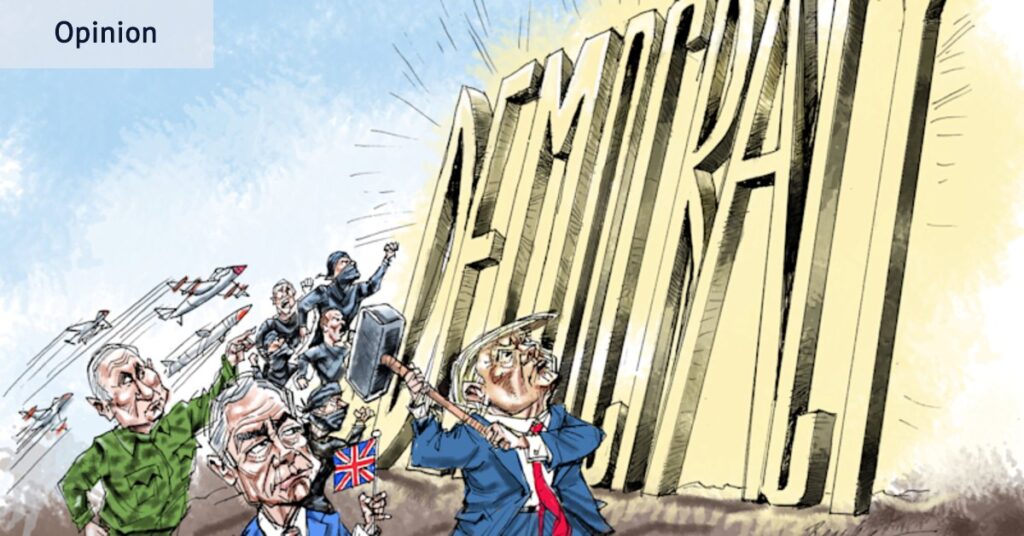
On September 1, 1939, as World War II erupted, poet W.H. Auden described the preceding decade as a “low dishonest decade.” Fast forward to the present, and similar sentiments echo as we reflect on the tumultuous events leading up to December 31, 2025. The past year has been marked by a proliferation of misinformation and unmet democratic aspirations, leaving many to wonder if we are on the brink of disaster. As we step into 2026, the urgency to awaken to these challenges is more pressing than ever.
Reflecting on 2025, the extraordinary has become almost mundane. Yet, the events of December 14 served as a stark reminder of the volatility of our times. In Europe, a major land war, now in its fourth year, continues to unfold, becoming a familiar backdrop to daily news. However, its implications are anything but ordinary.
Europe’s Ongoing Conflict and Its Global Repercussions
The war in Ukraine, reminiscent of historical conflicts like the V1 rocket attacks on London and the Battle of Stalingrad, has escalated to alarming levels. According to the BBC, Russian casualties range from 243,000 to 352,000, while Ukrainian deaths stand at approximately 140,000. Including injuries and prisoners of war, total casualties are estimated between 1.5 million and 2 million.
“The war has so far lasted a month longer than Hitler’s invasion of the Soviet Union – which traversed many of the same battlefields.”
This ongoing conflict has destabilized the region and raised questions about the global order. The rise of far-right parties across Europe, advocating for extreme measures such as “remigration,” adds another layer of complexity. In Germany, the Alternative For Deutschland (AfD) openly supports such policies, while antisemitic sentiments are being officially endorsed in Hungary.
The Rise of Far-Right Politics and Its Implications
The United States has not been immune to these ideological shifts. A recent tweet from the US Department of Homeland Security advocating for “remigration” underscores the normalization of extremist views. President Donald Trump’s National Security Strategy echoes these sentiments, warning of “civilisational erasure” due to non-European immigration.
In Britain, the political landscape is equally turbulent. The anti-immigration Reform Party, led by Nigel Farage, has gained significant traction, overshadowing the Labour government. Across Europe, populist far-right parties are consolidating power, challenging the traditional political order.
“The rapid undermining of the concept of truth is aiding this shift, as extremist governments manufacture the narratives they need.”
Australia’s Political Landscape: A Beacon of Hope?
Despite these global challenges, Australia has emerged as a potential model for countering populism. In May, Prime Minister Anthony Albanese’s Labor Party was re-elected with a record majority. However, the rise of Pauline Hanson’s One Nation Party, now polling at 16%, raises concerns about the resilience of liberal democracy.
The fear is that “illiberal-democracy” could gain a foothold in Australia, potentially leading to a shift in the political landscape. The emergence of figures like Andrew Hastie, who may transform the Liberal Party into a populist movement, underscores the fragility of the current political climate.
The Global Stakes: A Call to Action
As we navigate these uncertain times, the need for a mental reset is clear. The world is more divided and volatile than it was a decade ago, and the threat to liberal democracy is palpable. Leaders must articulate the necessity for national unity and confront the resurgence of anti-democratic politics.
Ending the Ukraine War is crucial to preventing a broader conflict. Prolonged warfare could unravel the international legal and diplomatic framework established post-World War II. Europe and the United States must exert pressure on Russia to reach a resolution that ensures Ukraine’s survival.
“If the war ends soon, might 2026 see Australian peacekeepers in Ukraine? If so, believers in democracy should support it.”
The upcoming midterm congressional elections in the United States may also play a pivotal role in shaping the global political landscape. As potential Democratic presidential contenders emerge, the world watches with bated breath, hoping for leadership capable of navigating these turbulent times.
As we enter 2026, it is imperative to recognize the extraordinary challenges facing our world and confront them with decisiveness and clarity. The echoes of history remind us that carrying on as usual is not an option. The sound of gunfire at Bondi serves as a wake-up call, urging us to take action and safeguard the future of liberal democracy.